





Speak with a licensed insurance agent

1-888-891-0229

Cancer Insurance: Compare Plans, Benefits and Quotes

Updated October 2026

Key Takeaway

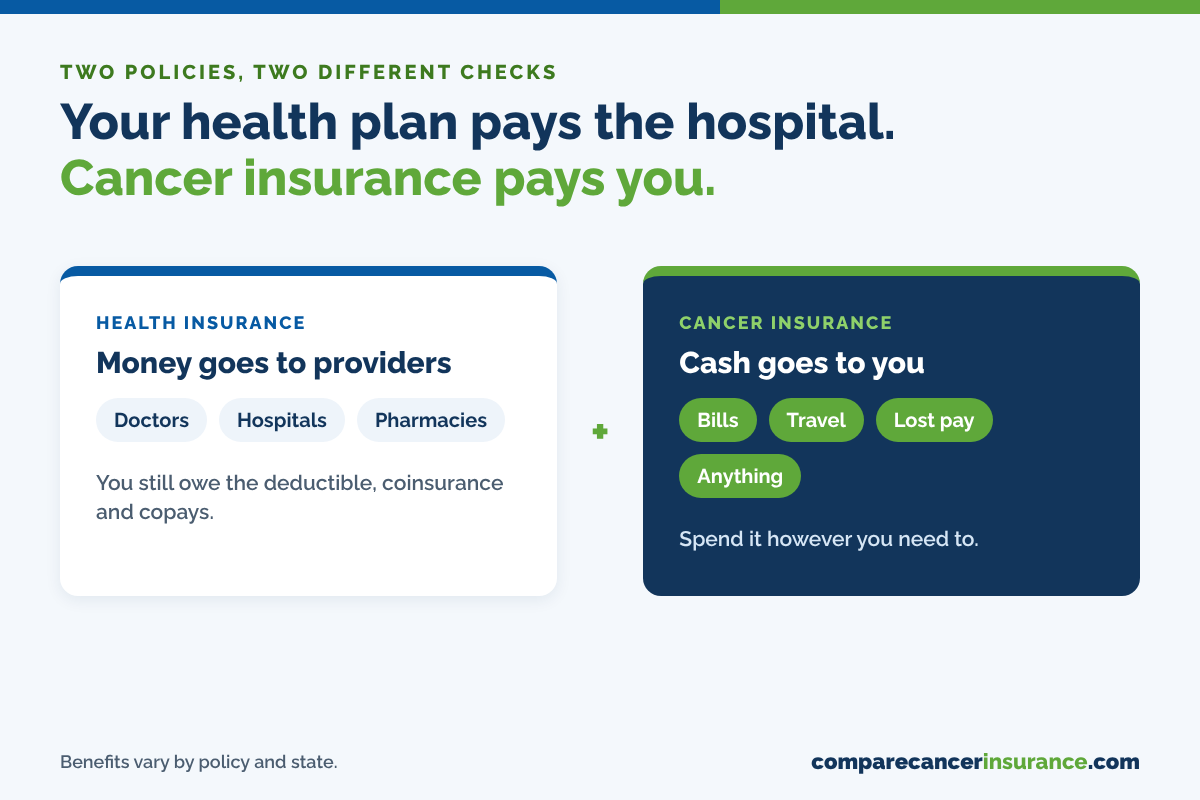
Your health plan pays the hospital. Cancer insurance pays you. Comparing several carriers side by side is the easiest way to find the right benefit amount at a premium you can keep paying for years.

Even good health coverage leaves gaps once cancer treatment starts. You may still owe a deductible and coinsurance, and your plan will not pay for the hotel near the treatment center, the gas money or the paychecks you miss while you recover.

Cancer insurance is a supplemental policy built for those gaps. It pays a cash benefit after a covered diagnosis, and you decide how to spend it. Prices and benefits differ widely from one insurance company to the next, which is why we help you compare Aetna, HealthSpring, Allstate, Mutual of Omaha and other carriers before you choose.

What to know before you compare
✔Covers adults of any age, not just retirees, with options for a spouse and children
✔Pairs with employer coverage, an ACA Marketplace plan or Medicare
✔Lump-sum benefits commonly range from $5,000 to $100,000, depending on the carrier
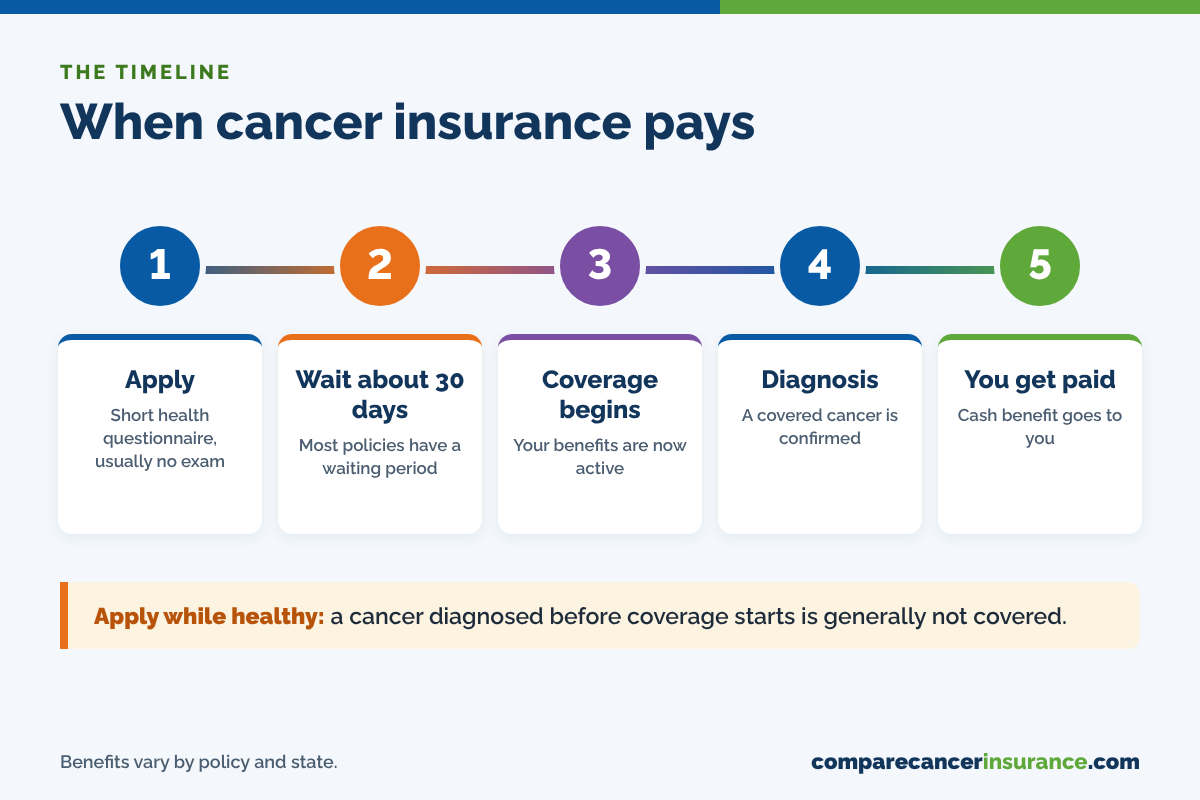
✔Most policies start paying after a waiting period of about 30 days

Compare Cancer Insurance Quotes Near You

Speak with a licensed insurance agent

1-888-891-0229

What Cancer Insurance Pays and How You Can Use It

A cancer policy does not pay a share of your medical bills the way health insurance does. It pays fixed dollar amounts written into the policy, and those amounts come in a few common forms.

Diagnosis Benefit

One cash payment when a covered cancer is first diagnosed. You can spend it on anything, from medical bills to the mortgage.

Treatment Benefits

Set payments for specific care, such as each round of chemotherapy, radiation, surgery or each day in the hospital.

Optional Riders

Add-ons that can include a recurrence benefit, hospital and ICU cash, or a payout for a heart attack or stroke.

Many people choose a diagnosis benefit for its flexibility, then add riders if they want more protection during a long course of treatment. The right mix depends on how much financial cushion you already have. For a full walk-through of waiting periods, claims and policy terms, read our complete guide to cancer insurance.

Paid on top of your other coverage

Most cancer policies pay their benefits regardless of what your health plan, Medicare or any other insurance pays.

Good to know

Cancer insurance is supplemental coverage. It does not replace major medical insurance and will not pay your doctors or hospital directly.

Cancer insurance vs health insurance: your health plan pays doctors and hospitals, while cancer insurance pays cash directly to you

Cancer Insurance vs. Health Insurance

The two types of coverage do different jobs. Here is how they compare once a diagnosis happens.

Health InsuranceCancer Insurance
What it paysA share of covered medical billsFixed cash amounts set in the policy
When it paysAs you receive covered careAt diagnosis, during treatment, or both
Your shareDeductibles, coinsurance and copaysUsually no deductible or copay
Non-medical costsNot coveredCash can go toward travel, lodging, bills and lost income
Doctor choiceLimited by the plan networkBenefits do not depend on a network

Benefits, limits and exclusions vary by policy and state. Review the outline of coverage before you buy.

Because the money is paid to you, it fills gaps that no health plan covers, such as a caregiver taking unpaid leave or a family member traveling with you for treatment.

Get Your Free Cancer Insurance Quote

Speak with a licensed insurance agent

1-888-891-0229

Who Cancer Insurance Is For

Cancer insurance is not just for retirees. The reasons to buy change with your stage of life, but the goal is the same: keep a diagnosis from turning into a financial crisis.

Working Adults and Families

✔Protects the household if a paycheck stops
✔Covers child care during treatment
✔Can cover a spouse and children

Self-Employed and High-Deductible Plans

✔Cash toward a high deductible
✔Replaces income you cannot bill for
✔Helps pay for second opinions

People on Medicare

✔Helps with Medicare cost-sharing
✔Fills gaps in a Medicare Advantage plan
✔Pays for travel to a distant cancer center

Family history?

If close relatives have had cancer, buying while you are healthy gives you the widest choice of policies and the lowest premiums.

Cancer Insurance Companies We Compare

We work with several of the largest names in supplemental insurance. Here is a snapshot of the policies people ask about most.

CarrierPolicy TypeLump-Sum RangeIssue Ages
AetnaLump sum with optional recurrence benefit$5,000 to $75,00018 to 89
HealthSpringLump sum or cancer treatment policy$5,000 to $100,00018 to 99
AllstateLump sum$5,000 to $75,00018 to 70
AflacScheduled treatment benefitsSet amounts per treatmentVaries by state

Amounts and ages vary by state and may change. Not every policy is sold in every state.

We also quote Mutual of Omaha and MetLife. See how all six stack up in our ranking of the best cancer insurance companies, or ask a licensed agent which carriers sell in your state.

How Much Cancer Insurance Costs

Your premium is mostly set by four things:

Your
age
Benefit
amount
Tobacco
use
Riders
added

Buying younger locks in a lower starting premium, and choosing a smaller benefit keeps the monthly cost down. Because most individual cancer policies have no deductible or copay, the premium is usually the only cost you pay until you file a claim. See a real sample rate and every pricing factor in our guide to the cost of cancer insurance.

Watch for

Read the waiting period, the look-back period for past cancers, and which cancers are excluded. Many policies exclude common skin cancers or pay a reduced amount for early-stage or in situ diagnoses.

When cancer insurance pays: apply, wait about 30 days, coverage begins, diagnosis, then the cash benefit is paid to you

How to Choose the Right Cancer Insurance Policy

Comparing policies takes only a few minutes when you know what to look at.

1List your out-of-pocket exposure. Add up your deductible, coinsurance limit and a few months of household bills.
2Pick a benefit amount. Choose a lump sum that would cover that total without straining your budget.
3Decide on riders. Consider a recurrence, hospital or heart attack and stroke rider if they fit your needs.
4Check the fine print. Compare waiting periods, exclusions and how each policy treats early-stage cancers.
5Compare carriers side by side. A licensed agent can pull free cancer insurance quotes from several insurance companies at once and help you apply.

The Bottom Line

A cancer policy turns a diagnosis into cash you control, on top of the coverage you already have. Buy while you are healthy, match the benefit to your real out-of-pocket risk, and compare more than one carrier before you decide.

See Cancer Insurance Plans in Your State

Speak with a licensed insurance agent

1-888-891-0229

Cancer Insurance FAQs

➤ How does cancer insurance work?

You pay a monthly premium, and if you are diagnosed with a covered cancer after your waiting period ends, the insurance company pays the benefits listed in your policy. Lump-sum policies pay one cash amount at diagnosis, while treatment-based policies pay set amounts as care happens. The money usually goes straight to you.

➤ Is cancer insurance worth it?

It is most worth it if a diagnosis would strain your savings, for example if you have a high deductible, rely on your paycheck or live far from a major cancer center. If you have large savings and low out-of-pocket costs, you may need less coverage or none at all.

➤ Does cancer insurance cover a cancer I already have?

No. A cancer diagnosed before your coverage starts is generally excluded, and many policies will not accept applicants with a recent diagnosis. Insurers often look back 5 to 10 years, so the time since your last treatment matters.

➤ How long is the waiting period for cancer insurance?

Most policies have a waiting period of about 30 days from the start of coverage. A cancer diagnosed during that window is usually not covered, so it pays to apply before you need the policy.

➤ Can I have more than one cancer insurance policy?

Generally, yes. Most cancer policies pay their benefits regardless of any other insurance you carry, including another cancer policy or an employer plan. Make sure the combined premiums still fit your budget.

➤ Does cancer insurance pay if my cancer comes back?

Some policies offer a recurrence benefit, often as an optional rider, and many require you to be treatment-free for a set period before it applies. Check how the policy handles a second diagnosis before you buy.

➤ Can I buy cancer insurance if I have Medicare?

Yes. Cancer insurance can be paired with Original Medicare, a Medicare Supplement plan or a Medicare Advantage plan. The cash benefit can help with Medicare cost-sharing and with costs Medicare never covers, such as travel and lodging.

➤ How do I get a cancer insurance quote?

Enter your ZIP code on this page or call to speak with a licensed agent. The agent can compare policies from Aetna, HealthSpring, Allstate, Mutual of Omaha and other carriers available in your state at no cost to you.

Have Questions?

Speak with a licensed insurance agent

1-888-891-0229